

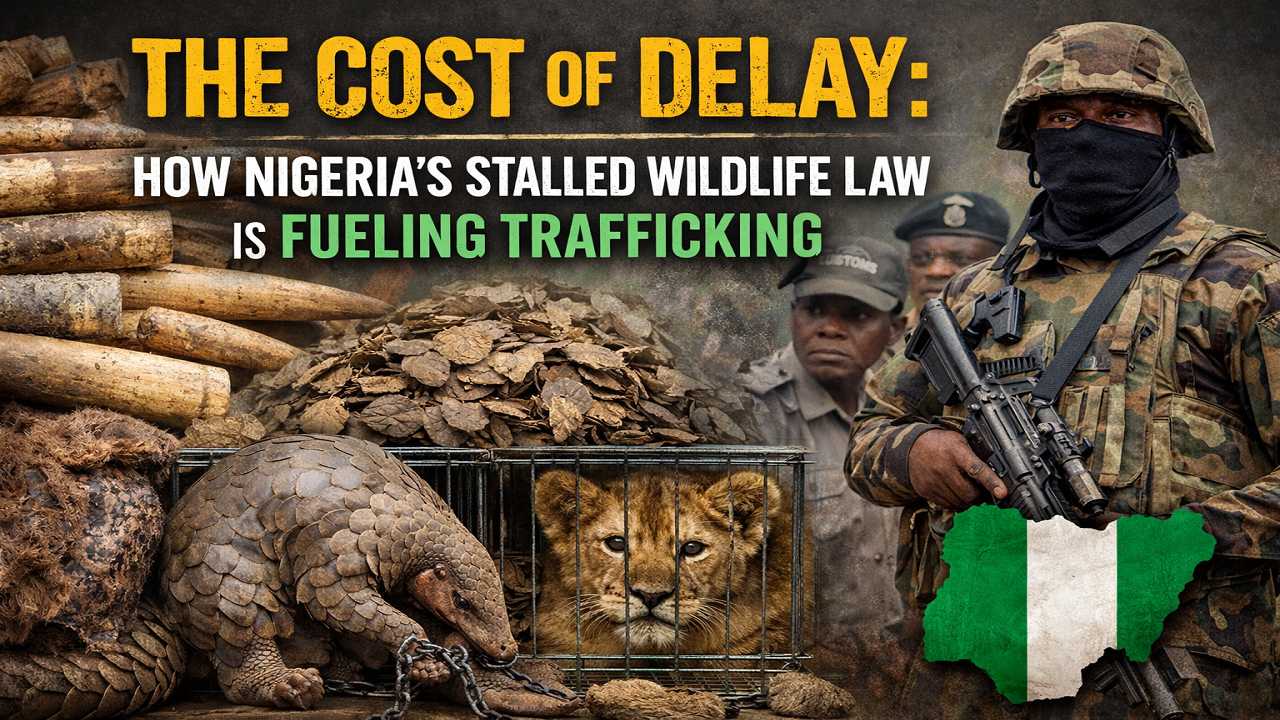
Nigeria is once again in the spotlight—not for oil, politics, or technology—but for a growing environmental crisis that continues to thrive in the shadows: illegal wildlife trafficking.
Despite recent legislative progress, the country finds itself in a troubling position where criminal networks remain active while a critical protection law awaits presidential approval. This delay has sparked concern among conservationists, law enforcement agencies, and international observers who see Nigeria as both a victim and a hub of global wildlife crime.
A Law Passed, But Not Yet Alive
In late 2025, Nigeria’s National Assembly passed the Endangered Species Conservation and Protection Bill, a landmark piece of legislation designed to overhaul outdated wildlife laws.
The bill introduces:
- Harsher penalties (up to 10 years in prison)
- Fines reaching ₦12 million
- Expanded investigative powers for authorities
- Alignment with international conservation agreements
On paper, it is one of the strongest wildlife protection frameworks in West Africa. But there’s one major problem:
👉 It has not yet been signed into law by the president.
The delay reportedly stems from technical revisions—particularly the need to correct omissions in the list of endangered species recognized under Nigerian law.
While lawmakers say the corrections are complete and the bill is ready, every day without formal assent leaves a dangerous gap between policy and enforcement.

Trafficking Continues Unchecked
In the absence of this stronger legal backing, wildlife trafficking has not slowed—it has continued, almost unabated.
Within just six months after the bill was passed, Nigeria recorded multiple major seizures:
- Elephant ivory shipments
- Live pangolins
- Monkeys and a lion cub
- Hyenas and protected bird species
These seizures highlight a harsh reality:
👉 Nigeria remains a major transit and export hub for illegal wildlife products.
Historically, the country has been linked to:
- Over 30 tonnes of ivory trafficking since 2015
- A significant share of the global pangolin scale trade
Pangolins, often called the most trafficked mammals in the world, are particularly targeted due to demand in traditional medicine and luxury markets abroad.
Why Nigeria Is a Key Target for Traffickers
There are several reasons Nigeria has become central to global wildlife trafficking networks:
1. Strategic Location
Nigeria’s ports, airports, and porous borders make it an ideal transit point for illegal goods moving from Central and West Africa to Asia and Europe.
2. Weak Enforcement Framework (Until Now)
Before the new bill, penalties for wildlife crimes were extremely low—sometimes as little as:
- ₦100,000 fines
- Or just a few months in prison
Such light punishment made wildlife crime a low-risk, high-profit business.
3. Organized Criminal Networks
Wildlife trafficking is no longer a small-scale activity. It is:
- Highly organized
- Internationally connected
- Often linked to other crimes like drug trafficking and money laundering
This makes it harder to combat without strong laws and coordinated enforcement.

The Cost of Delay: More Than Just Wildlife
While the immediate victims are animals, the broader consequences of wildlife trafficking are far-reaching.
Environmental Damage
The removal of key species disrupts ecosystems. For example:
- Loss of predators affects population balance
- Removal of species like pangolins increases insect populations
Economic Impact
Nigeria loses potential revenue from:
- Tourism
- Conservation funding
- Sustainable wildlife management
Global Reputation
Nigeria has, at times, been labeled a global hub for wildlife crime, which affects its international image and environmental credibility.
What the New Law Could Change
Experts believe that once signed, the new legislation could be a game-changer.
Key expected impacts include:
- Stronger deterrence through tougher penalties
- Better tools for investigators (tracking finances, seizing assets)
- Faster prosecution of offenders
- Improved international cooperation
According to conservation advocates, the law would significantly empower investigators, prosecutors, and the judiciary to tackle wildlife crime more effectively.
In short, it could shift Nigeria from being a trafficking hotspot to a regional leader in conservation enforcement.
Pressure Mounts for Presidential Action
Conservation groups and environmental organizations are now urgently calling for the president to sign the bill into law.
Their argument is simple:
The longer the delay, the more time traffickers have to operate freely.
Even Nigeria’s Customs Service—responsible for many of the seizures—has expressed support for a stronger legal framework, acknowledging that enforcement alone is not enough without legal backing.
The Bigger Picture: A Global Fight
Nigeria’s situation is not isolated. Wildlife trafficking is a multi-billion-dollar global industry, driven by demand for:
- Ivory
- Exotic pets
- Traditional medicine ingredients
But because Nigeria plays such a key role in the supply chain, what happens here has global consequences.

Conclusion: A Critical Moment for Nigeria
Nigeria stands at a crossroads.
On one hand, it has:
- A strong, modern wildlife protection law ready to go
- Increasing awareness of environmental crime
- Support from global conservation networks
On the other hand:
- Trafficking continues
- Criminal networks remain active
- And the legal system is still catching up
The signing of this bill could mark a turning point—not just for Nigeria’s wildlife, but for its global environmental standing.
Until then, however, the country remains in a dangerous holding pattern—where laws exist, but justice is still waiting.