

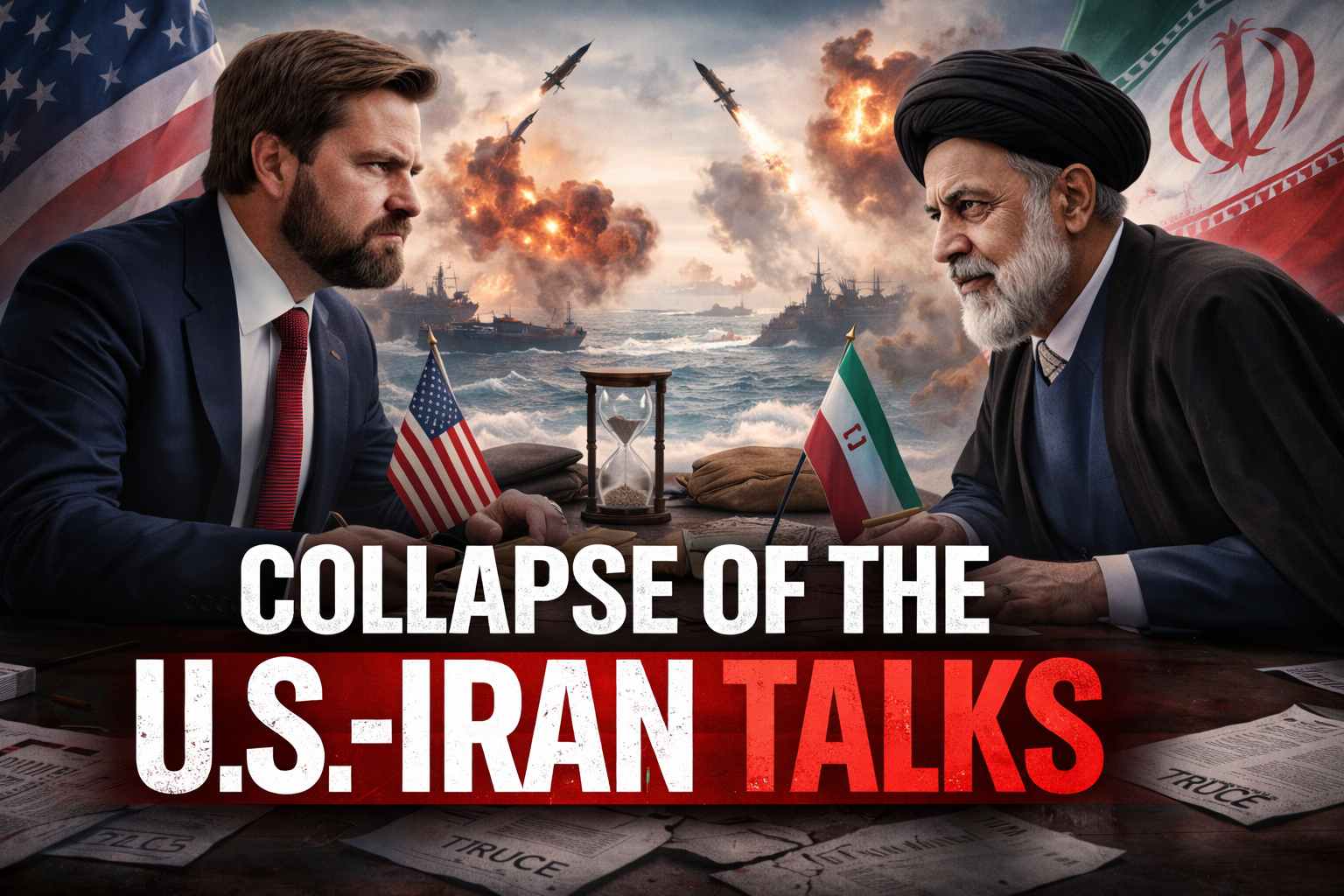
TT – The collapse of the 2026 U.S.–Iran talks marks a decisive moment in global geopolitics, exposing deep-rooted tensions that diplomacy alone could not resolve. After hours of high-stakes negotiations, both sides walked away without agreement—leaving a fragile ceasefire, rising regional instability, and the global economy hanging in the balance. This breakdown was not just a failed meeting, but a clash of fundamentally opposing visions on nuclear power, sovereignty, and influence in the Middle East.
Overview: What Happened?
The United States and Iran held high-stakes negotiations in Islamabad, Pakistan, aimed at ending an escalating regional war and stabilizing a fragile ceasefire. After over 20 hours of talks, the negotiations collapsed without agreement.
This was not just another failed diplomatic round—it was:
- The first direct high-level engagement in years
- A critical attempt to prevent wider regional war
- A negotiation occurring amid active military confrontation
The failure has left:
- The ceasefire fragile
- The Strait of Hormuz still contested
- The risk of renewed conflict extremely high
Core Issues That Derailed the Talks
A. The Nuclear Program: The Central Deadlock
At the heart of the breakdown was Iran’s nuclear program.
U.S. position:
- Zero pathway to nuclear weapons
- Severe restrictions or elimination of enrichment
- Long-term or permanent compliance
Iran’s position:
- Right to uranium enrichment is non-negotiable
- Nuclear sovereignty = national sovereignty
- No indefinite restrictions
This fundamental clash—non-proliferation vs. sovereignty—proved irreconcilable.
👉 Insight: This is not a technical disagreement—it is existential for both regimes.
B. Sanctions vs. Concessions
A second major divide involved economic pressure vs. relief.
- The U.S. demanded major concessions before lifting sanctions
- Iran demanded immediate sanctions relief and access to frozen assets
Iran also demanded:
- Compensation for wartime damage
- Guarantees against future attacks
👉 Insight: This reflects a trust deficit shaped by decades of broken agreements.
C. The Strait of Hormuz: Economic Warfare
The Strait of Hormuz—through which ~20% of global oil passes—became a major sticking point.
U.S. goals:
- Free navigation
- Immediate reopening
Iran’s demands:
- Sovereign control
- Ability to charge transit fees
The strait is not just strategic—it is Iran’s strongest leverage point in global geopolitics.
👉 Insight: Control of Hormuz gives Iran asymmetric power against a stronger military adversary.
D. Regional Influence & Proxy Conflicts
The U.S. demanded that Iran:
- End support for groups like Hezbollah and others
- Reduce regional military footprint
Iran countered:
- Regional alliances are part of its defensive doctrine
- Conflicts (e.g., Lebanon) must be included in any deal
👉 Insight: This reflects a broader struggle over Middle East power architecture, not just bilateral relations.
E. War Context: Negotiating Under Fire
Unlike earlier diplomatic efforts (e.g., 2015 nuclear deal), these talks occurred:
- During an active war involving U.S. and Israeli strikes
- Amid missile attacks and economic disruption
This dramatically reduced room for compromise.
👉 Insight: Diplomacy during war tends to fail because:
- Leaders cannot appear weak
- Domestic political pressure increases
- Trust collapses entirely

Structural Reasons for Failure
Beyond specific disagreements, deeper structural forces made failure likely:
1. Total Breakdown of Trust
Iran explicitly cited distrust of the U.S. due to:
- Past deal withdrawals
- Ongoing military actions
2. Maximalist Demands on Both Sides
- The U.S. presented a “final and best offer”
- Iran responded with expansive counter-demands
👉 Neither side negotiated incrementally—both aimed for strategic wins.
3. Domestic Political Constraints
- U.S. leadership framed the war as already “won”
- Iranian leadership framed resistance as national dignity
👉 Compromise becomes politically dangerous in such environments.
4. Shift from Diplomacy to Coercion
Both sides entered talks with:
- Military buildup
- Implicit threats of escalation
👉 The negotiations resembled coercive bargaining, not cooperative diplomacy.
Why This Failure Matters Globally
A. Risk of Renewed War
The talks were tied to a temporary ceasefire. Their failure:
- Increases probability of escalation
- Could trigger broader regional conflict
B. Energy and Economic Shock
- The Strait of Hormuz disruption has already affected global markets
- Oil prices and inflation risks are rising
👉 This is not just a regional crisis—it’s a global economic threat.
C. Collapse of Nuclear Diplomacy
Iran has indicated:
- No immediate plans for further talks
👉 This could mark the end of the diplomatic track on Iran’s nuclear program.
D. Multipolar Geopolitical Fallout
- China, Russia, and regional actors may step in
- U.S. influence in diplomacy may weaken
👉 The crisis accelerates a shift toward multipolar power competition.
Strategic Interpretation
1. This Was Not Meant to Succeed Easily
Both sides used the talks to:
- Test the opponent’s red lines
- Position themselves for future escalation or leverage
2. Iran Negotiated from Asymmetric Strength
Despite military pressure, Iran:
- Controlled a global energy chokepoint
- Maintained regional proxy influence
3. The U.S. Prioritized Long-Term Security Over Short-Term Peace
The U.S. refused a deal that:
- Allowed enrichment
- Preserved Iran’s strategic capabilities

What Happens Next?
Three likely scenarios:
Scenario 1: Renewed Conflict
- Collapse of ceasefire
- Expanded regional war
Scenario 2: Frozen Conflict
- No deal, no escalation
- Continued economic and military tension
Scenario 3: Delayed Diplomacy
- Backchannel negotiations resume later
- Smaller, incremental agreements

Conclusion (Takeaway)
The failure of the U.S.–Iran talks was not just a diplomatic setback—it was the collision of incompatible worldviews:
- The U.S. seeks containment and non-proliferation
- Iran seeks sovereignty and regional power recognition
With both sides unwilling to compromise on core strategic interests, the talks were structurally doomed.
👉 The real takeaway:
This was less a failed negotiation—and more a preview of a prolonged geopolitical confrontation.