
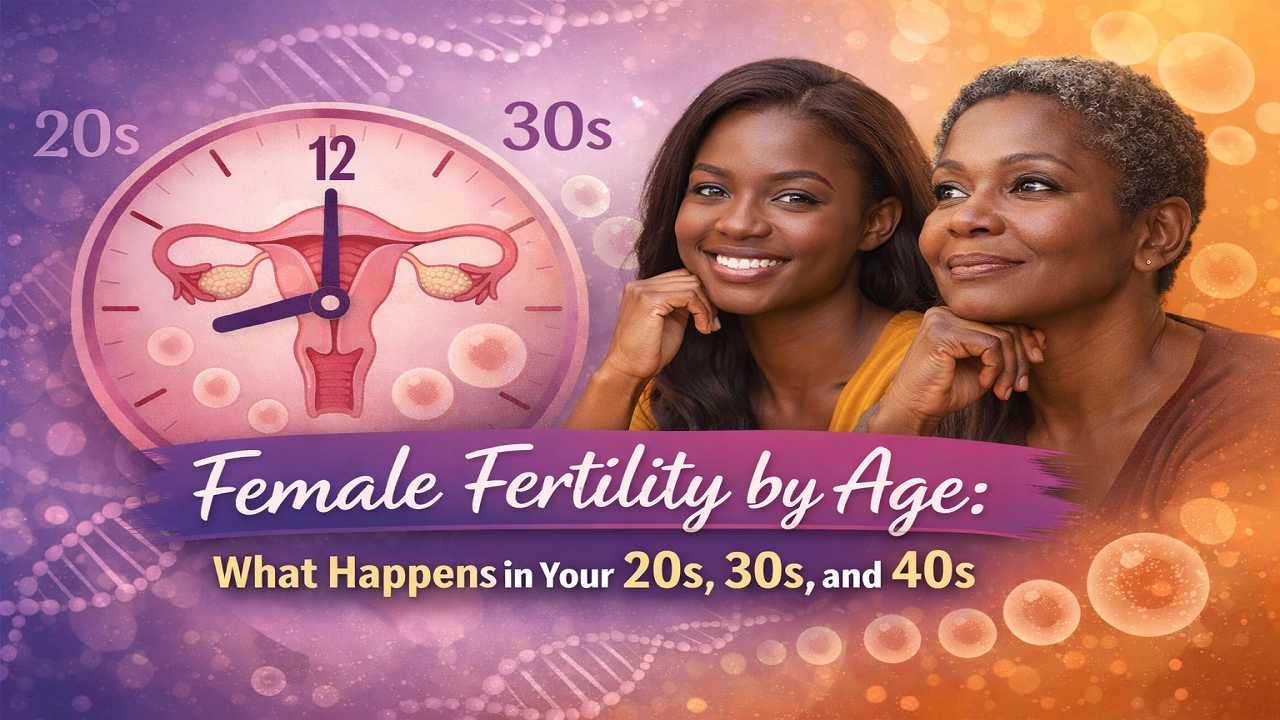
Fertility is a natural biological process, but it is strongly influenced by age. While many women today delay having children due to career, education, or personal reasons, understanding how age affects fertility is essential for making informed reproductive decisions. This article explores the biological reasons fertility changes over time, what to expect at different life stages, and options available for women who wish to conceive later in life.
Understanding Female Fertility
Female fertility depends on several factors, including:
- The number and quality of eggs in the ovaries
- Regular ovulation
- Hormonal balance
- Reproductive health of the uterus and fallopian tubes
Unlike men, who continuously produce sperm throughout life, women are born with a finite number of eggs. This number gradually decreases with age, and the quality of the eggs also declines over time.
At birth, a female typically has about 1–2 million eggs in her ovaries. By puberty, this number drops to about 300,000–400,000, and only around 300–500 eggs will be ovulated during her reproductive years.
Fertility in Your 20s
For most women, the 20s represent the peak of fertility.
Key characteristics:
- Highest egg quality
- Highest chance of natural conception
- Lower risk of pregnancy complications
- Lower risk of miscarriage and chromosomal abnormalities
The probability of getting pregnant each month (known as fecundability) is approximately 20–25% for a healthy woman in her 20s.
Women in this age group also tend to respond better to fertility treatments if needed.

Fertility in Your Early 30s
Fertility remains relatively strong in the early 30s, but subtle changes begin to occur.
What happens biologically:
- Gradual decline in egg quantity
- Slight reduction in egg quality
- Hormonal changes start slowly emerging
Monthly pregnancy chances may decline slightly to around 15–20% per cycle, but most women in this age range can still conceive naturally without difficulty.
However, by age 32–35, the decline in fertility becomes more noticeable.
Fertility After 35
Age 35 is often considered a turning point in female fertility.
This is because the decline in both egg number and egg quality accelerates.
Key changes:
- Fewer eggs available for ovulation
- Increased chromosomal abnormalities in eggs
- Higher risk of miscarriage
- Increased pregnancy complications
The monthly chance of conception drops to about 10–15% per cycle.
Risks that increase after 35 include:
- Miscarriage
- Gestational diabetes
- High blood pressure during pregnancy
- Chromosomal conditions such as Down syndrome
Despite these risks, many women still have healthy pregnancies in their late 30s with proper medical care.

Fertility in the 40s
Fertility declines more significantly in the 40s.
By age 40:
- Monthly chance of pregnancy may fall to 5–10%
- Egg quality declines sharply
- Miscarriage risk rises to about 40–50%
Another factor is the approach of Menopause, the natural end of a woman’s reproductive years. Before menopause, women experience Perimenopause, a transitional phase when hormone levels fluctuate and ovulation becomes irregular.
While natural conception is still possible in the early 40s, it becomes increasingly difficult.
Why Fertility Declines with Age
Several biological mechanisms explain age-related fertility decline:
1. Declining Egg Quantity
Women lose eggs over time through a process called atresia, where immature eggs degenerate and are reabsorbed by the body.
By the late 30s and early 40s, the remaining egg reserve becomes much smaller.
2. Reduced Egg Quality
As women age, eggs are more likely to develop chromosomal abnormalities, which can lead to:
- Difficulty conceiving
- Increased miscarriage risk
- Genetic conditions in the baby
3. Hormonal Changes
Aging affects reproductive hormones such as:
- Estrogen
- Progesterone
- Follicle-stimulating hormone (FSH)
These hormonal shifts can lead to irregular ovulation and reduced fertility.
4. Increased Reproductive Health Issues
Older women are more likely to develop conditions that affect fertility, such as:
- Endometriosis
- Polycystic ovary syndrome
- Uterine fibroids
These conditions can interfere with ovulation, fertilization, or embryo implantation.
Fertility Testing and Assessment
Women who are concerned about their fertility can undergo several medical tests to assess reproductive potential.
Common tests include:
- Anti-Müllerian hormone (AMH) test – measures ovarian reserve
- Follicle-stimulating hormone (FSH) test – evaluates ovarian function
- Ultrasound to count antral follicles
These tests help doctors estimate the remaining egg supply and fertility potential.
Options for Women Who Want to Delay Pregnancy
For women who plan to have children later, several options may help preserve fertility.
Egg Freezing (Oocyte Cryopreservation)
Egg freezing allows women to store healthy eggs at a younger age for future use. The eggs can later be fertilized using In vitro fertilization (IVF).
IVF Treatment
IVF can help overcome fertility challenges by fertilizing eggs outside the body and transferring embryos to the uterus.
However, IVF success rates still depend on age and egg quality.
Donor Eggs
For women with very low ovarian reserve, using donor eggs from younger women may significantly increase pregnancy chances.
Lifestyle Factors That Influence Fertility
While age is the most important factor, lifestyle choices also play a role.
Women can support reproductive health by:
- Maintaining a healthy weight
- Avoiding smoking and excessive alcohol
- Managing stress
- Eating a balanced diet
- Getting regular exercise
Healthy lifestyle habits cannot stop age-related fertility decline, but they can help maintain overall reproductive health.
When to Seek Medical Advice
Experts recommend seeking medical help if:
- Under 35 and trying to conceive for 12 months without success
- Over 35 and trying for 6 months without success
- Over 40 and trying for 3 months without success
Early evaluation allows doctors to identify potential problems and recommend appropriate treatments.

Final Thoughts
Age plays a crucial role in female fertility, affecting both the number and quality of eggs. While women are most fertile in their 20s and early 30s, fertility gradually declines after 35 and more sharply after 40.
However, advances in reproductive medicine—such as egg freezing and IVF—have expanded options for women who want to conceive later in life.
Understanding how fertility changes with age empowers women to make informed choices about their reproductive health and family planning.