

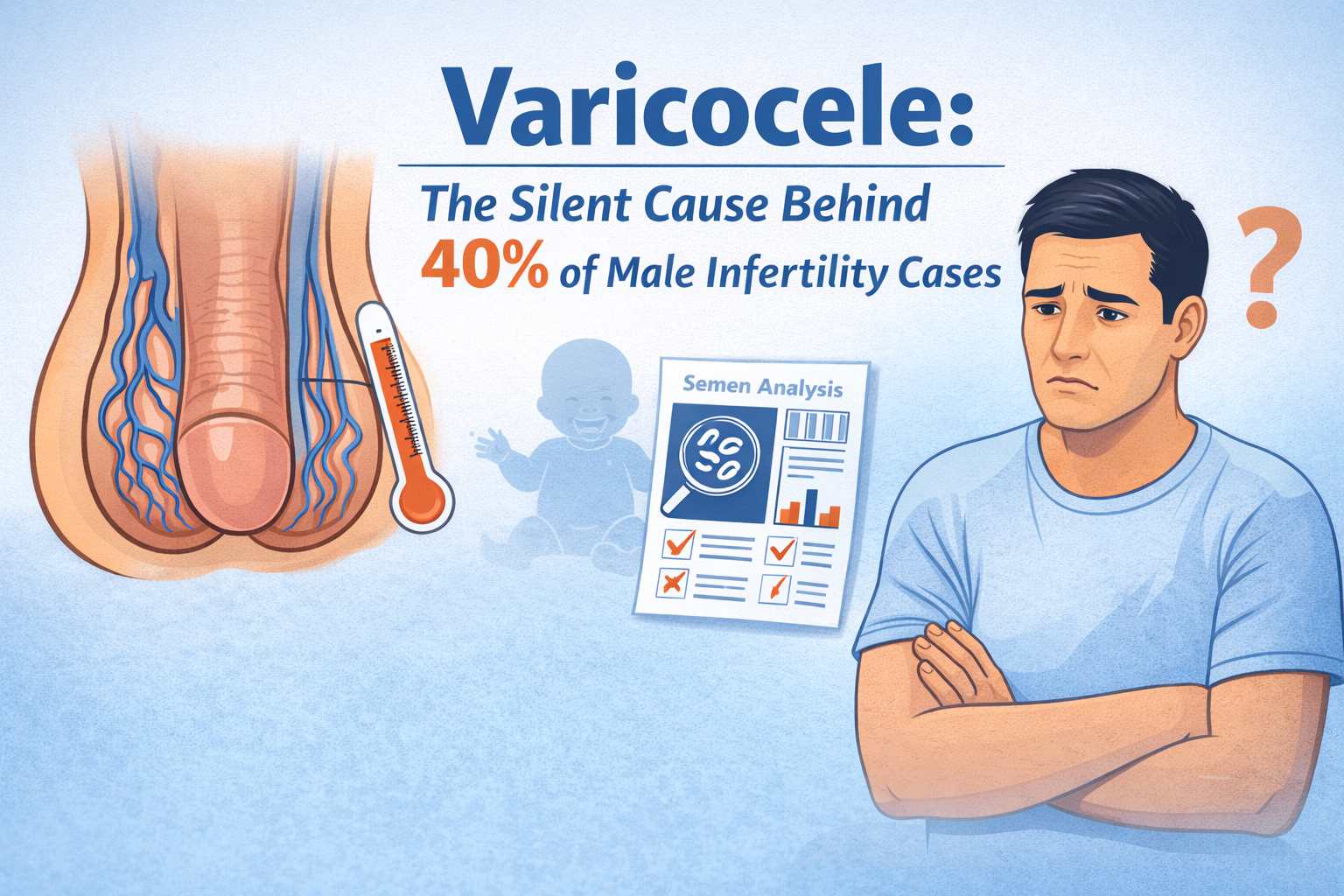
TT – Male infertility often remains unspoken, taboo or overlooked—especially in cultures where fertility is deeply tied to identity. But behind many unexplained cases lies a surprisingly common, treatable condition known as varicocele. Often silent and painless, varicoceles may quietly undermine fertility in nearly 40% of men struggling to conceive.
What Is a Varicocele?
A varicocele is an abnormal enlargement of the veins in the scrotum—the loose pouch that holds the testicles. These veins (the pampiniform plexus) function like the veins in your legs: they carry deoxygenated blood back toward the heart via one-way valves. When these valves fail, blood pools, veins dilate, and a varicocele forms.
Varicoceles are most often found on the left side, likely due to anatomical differences in how the left testicular vein drains into the larger venous system. They usually develop during puberty and may persist for life unless treated.
Why the Term “Silent” Fits
A varicocele often doesn’t hurt. In fact:
- Many men never notice it.
- Some only discover it when evaluated for fertility.
- In mild cases it may be completely asymptomatic.
When symptoms do occur, they might be subtle: a dull ache, a sense of heaviness, or a “bag of worms” sensation in the scrotum.
Because it doesn’t always cause discomfort, many men ignore it—until the emotional and medical sting of infertility brings them in for help.
Prevalence & the 40% Connection
Varicoceles are relatively common in the general male population, affecting about 15–25% of adult men. Yet their frequency climbs dramatically among men dealing with fertility problems:
- Found in ~40% of men evaluated for infertility.
- Present in about 25–35% of men with abnormal semen parameters.
This doesn’t mean the varicocele always causes infertility—but the association is strong enough that fertility specialists consider it a top suspect when couples struggle to conceive.
How Does a Varicocele Impair Fertility?
Doctors aren’t 100% sure of the precise mechanisms, but several biological factors likely contribute:
1. Increased Scrotal Temperature
The testes need to be cooler than body temperature to produce healthy sperm. Blood pooling in varicose veins can raise the local temperature, impairing sperm production and function.
2. Oxidative Stress & Toxin Buildup
Poor circulation may lead to buildup of harmful substances and oxidative stress, damaging sperm DNA and lowering quality.
3. Poor Oxygenation & Biochemical Imbalance
Blood stasis can reduce oxygen delivery and expose testicular tissue to refluxed metabolites from nearby adrenal or renal veins, affecting sperm development.
4. Physical Impact
Severe varicoceles may physically compress surrounding structures, disrupting the delicate environment needed for spermatogenesis (sperm production).
Signs & Diagnosis
Symptoms to Watch For
While varicoceles can be silent, some men experience:
- Scrotal discomfort or dull pain, especially after standing or physical exertion.
- A palpable mass or “bag of worms” texture above the testicle.
- Testicular shrinkage (atrophy) on the affected side.
However, many men have no symptoms at all.
How It’s Detected
- Physical examination: Palpation while standing.
- Ultrasound imaging: Confirms presence and measures veins.
- Semen analysis: Reveals sperm count, motility, and morphology changes common with varicoceles.
Treatment Options
Varicoceles don’t always require treatment—especially if there are no fertility issues or symptoms. But when infertility is a concern, options include:
1. Microsurgical Varicocelectomy
This minimally invasive surgery ties off the problematic veins, redirecting blood flow to healthier vessels. It’s considered the gold standard with the highest success and lowest complication rates.
2. Embolization
A radiologist inserts a coil or fluid through a catheter to block blood flow in the faulty vein. Less invasive but suitable only for some cases.
3. Monitoring
For men with normal semen parameters and no symptoms, monitoring may be sufficient.
Effectiveness
Post-treatment, about two-thirds of men see improved semen parameters, and roughly 40% of couples achieve pregnancy without assisted reproductive technologies.
Controversies & Gaps in Evidence
While varicocele repair often improves semen quality and pregnancy rates, some randomized trials have shown mixed results on live-birth outcomes. The precise relationship between treating varicoceles and successful pregnancy is still under scientific debate.
Nonetheless, for many couples, identifying and addressing a varicocele opens a clearer path forward—sometimes eliminating the need for more invasive fertility treatments like IVF.
Why Awareness Matters
Infertility can take an emotional toll, especially when couples feel stuck or lack clear answers. But because varicoceles are both common and potentially treatable, raising awareness is crucial. With early evaluation and the right interventions:
- Men can reclaim reproductive confidence.
- Couples can make informed decisions about treatment.
- Unnecessary delays or expensive procedures can be avoided.
Final Thought
Varicoceles may be silent, but their impact on male fertility is anything but. In up to 40% of cases where men struggle to conceive, this often-ignored condition may play a key role—and offer hope when properly diagnosed and treated.