

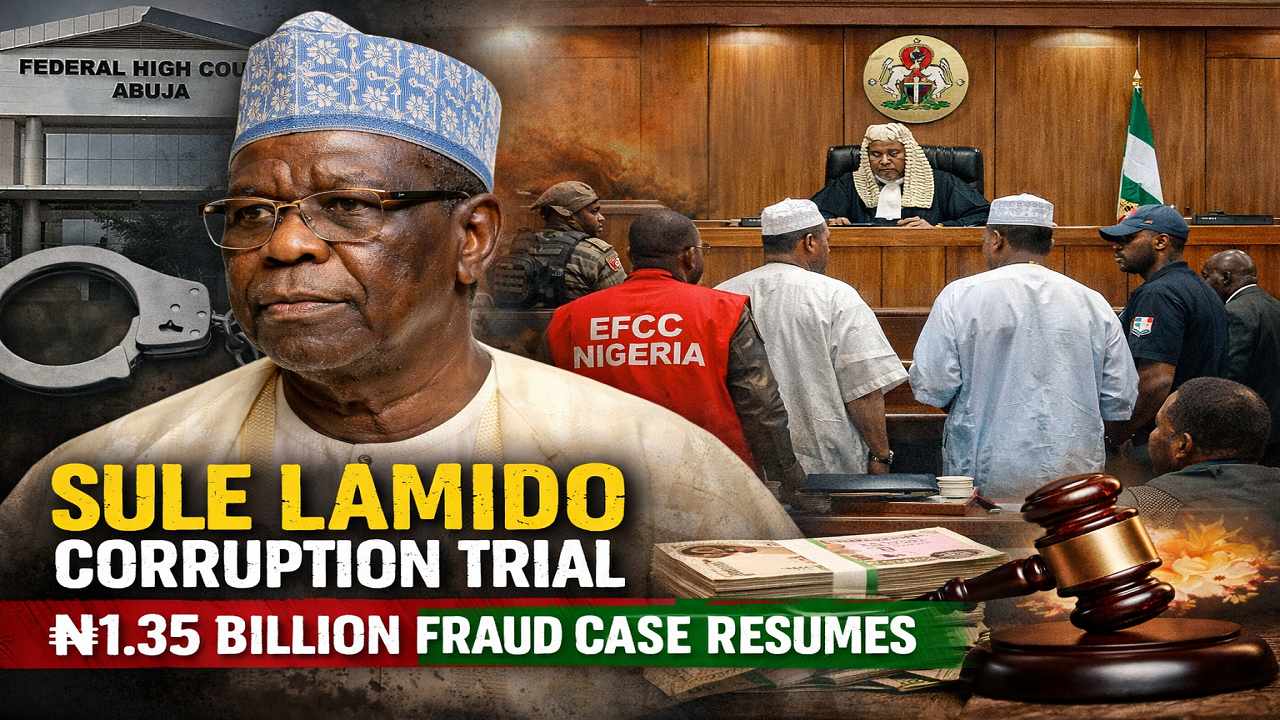
The corruption trial involving former Jigawa State governor Sule Lamido has returned to the spotlight after Nigeria’s highest court ordered the continuation of a long-running fraud case against him and two of his sons. The case, which centers on allegations of ₦1.35 billion in corruption and money laundering, has become one of the most closely watched political trials in Nigeria, highlighting the country’s ongoing struggle with high-level corruption and accountability in public office.
Background: Who Is Sule Lamido?
Sule Lamido is a prominent Nigerian politician and a member of the Peoples Democratic Party. He served as governor of Jigawa State from 2007 to 2015, during which time he became an influential figure in national politics. Before becoming governor, Lamido had a long political career, including serving in Nigeria’s House of Representatives and holding various leadership roles within his party.
However, shortly after leaving office, Lamido became the subject of a major investigation by Nigeria’s anti-corruption agency, the Economic and Financial Crimes Commission (EFCC). The investigation led to criminal charges accusing him of abusing his office and laundering public funds.
The Allegations: ₦1.35 Billion Fraud Case
The EFCC alleges that Lamido and his sons—Mustapha Lamido and Aminu Lamido—received kickbacks from contractors handling government projects in Jigawa State while Lamido was governor. According to prosecutors, these payments were allegedly disguised through companies and financial transactions to conceal their origin.
The prosecution claims the funds were diverted from state resources through fraudulent contracts and financial arrangements, forming part of a 37-count charge that includes allegations of money laundering, abuse of office, and conspiracy.
Authorities argue that the case reflects a broader pattern of corruption in public office, where officials allegedly exploit government contracts and development projects to enrich themselves.

Legal Battles and Appeals
The case has gone through a complex legal journey spanning several years. Initially, the charges were brought before the Federal High Court in Abuja, where the EFCC attempted to prosecute Lamido and his co-defendants.
However, in 2023 the Court of Appeal ruled in favour of Lamido, dismissing the case after accepting a “no-case submission.” The court concluded that the Federal High Court lacked jurisdiction to try the case.
The EFCC challenged that decision and appealed to Nigeria’s Supreme Court. In a landmark ruling delivered in January 2026, the Supreme Court overturned the Court of Appeal’s decision, reinstating the charges and ordering that the trial continue at the Federal High Court in Abuja.
The Supreme Court ruled unanimously that the defendants still have a case to answer, effectively reopening the corruption trial.
Latest Development: Court Fixes Date for Fresh Arraignment
Following the Supreme Court’s decision, a Federal High Court in Abuja has scheduled a fresh arraignment for Lamido and his sons, allowing the case to proceed again in court. The court fixed April 1, 2026 as the new date for the proceedings.
The defendants were expected to appear in court to take their plea, but they did not attend the first scheduled hearing. Their lawyer explained that the notice for the hearing was received only a day earlier, making it difficult for them to travel from Kano to Abuja in time.
The defence has assured the court that the accused persons will appear on the next scheduled date.
Related Legal Issues Involving Lamido’s Family
The legal troubles involving Lamido’s family extend beyond the main corruption case. In a separate ruling earlier in 2026, Nigeria’s Supreme Court upheld the conviction of his son, Aminu Lamido, for failing to declare $40,000 in cash while traveling abroad, ordering that the money be forfeited to the federal government.
Although this case is separate from the alleged ₦1.35 billion fraud, it has further intensified public attention on the broader corruption allegations surrounding the Lamido family.
The Role of the EFCC in Nigeria’s Anti-Corruption Fight
The prosecution of Lamido is part of the broader efforts by the Economic and Financial Crimes Commission to tackle corruption among public officials. The EFCC has been responsible for investigating and prosecuting numerous cases involving politicians, government officials, and business leaders.
However, critics argue that corruption trials in Nigeria often take many years to resolve due to legal delays, appeals, and procedural challenges. As a result, some high-profile cases remain unresolved for long periods.
The Lamido case illustrates these challenges, having lasted for more than a decade since the initial allegations emerged.
Political and National Significance
The resumption of the trial has significant implications for Nigerian politics and governance.
First, it reinforces the authority of the judiciary and signals that politically influential individuals can still face legal scrutiny.
Second, the case highlights the importance of judicial independence and due process in handling corruption allegations involving senior political figures.
Finally, it serves as a test of Nigeria’s anti-corruption institutions. Many Nigerians believe that successfully prosecuting high-profile cases could help restore public trust in government and deter future corruption.

What Happens Next?
With the trial now set to resume, the next stage of proceedings will involve the defendants entering their pleas and the court reviewing evidence presented by the prosecution and defence.
If the trial proceeds as expected, the Federal High Court will determine whether the evidence presented by the EFCC is sufficient to prove the allegations beyond a reasonable doubt.
The outcome of the case could have lasting consequences not only for Lamido and his family but also for Nigeria’s broader campaign against corruption in public office.