

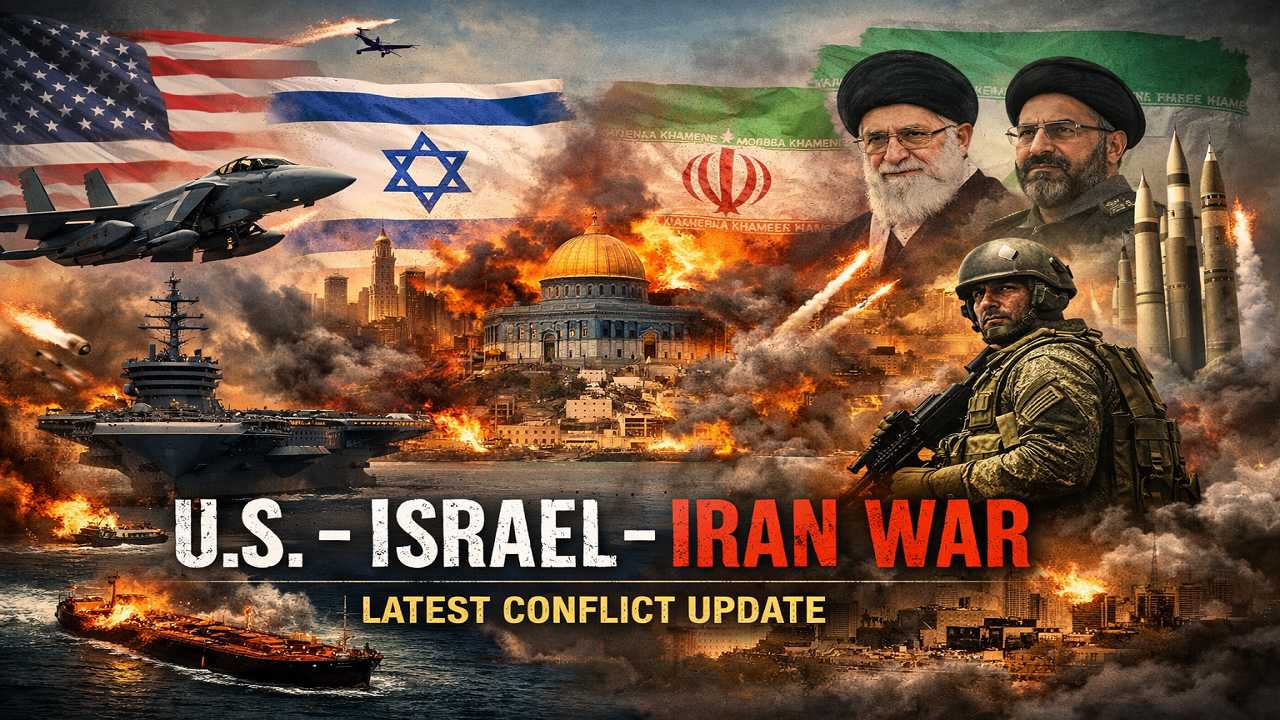
The conflict between the United States, Israel, and Iran has escalated into one of the most serious geopolitical crises in recent history. What began as rising tensions over Iran’s nuclear program and regional influence has now turned into an open military confrontation involving missile strikes, drone attacks, and naval confrontations across the Middle East.
Since 28 February 2026, coordinated strikes by the United States and Israel against Iranian targets have triggered a wider regional war involving Gulf states, militant groups, and global economic consequences.
This article provides a comprehensive update on the current war, including how it started, the major developments so far, and what it could mean for the future of global security.
1. Background: Years of Escalating Tensions
The war did not begin suddenly in 2026. Instead, it was the culmination of years of growing hostility between Iran, Israel, and the United States.
Key Sources of Tension
- Iran’s nuclear program
Israel and the United States have long accused Iran of pursuing nuclear weapons, while Iran insists its nuclear program is for peaceful energy purposes. - Regional proxy conflicts
Iran supports groups such as Hezbollah in Lebanon and other militant organizations across the Middle East, which Israel considers direct threats. - Previous clashes
The region already saw a major confrontation in 2025 during the “Twelve-Day War,” which ended with a temporary ceasefire.
Although that ceasefire held for several months, tensions continued to rise due to failed nuclear negotiations and military buildups across the region.

2. The Trigger: The February 2026 Airstrikes
The current war began on 28 February 2026, when Israel launched a large-scale attack known as Operation Lion’s Roar, targeting Iranian military and government facilities.
The strikes reportedly involved coordination with the United States and targeted multiple Iranian cities, including:
- Tehran
- Isfahan
- Qom
- Karaj
- Kermanshah
One of the most dramatic outcomes of the initial strike was the death of Iran’s Supreme Leader Ayatollah Ali Khamenei, killed in an airstrike targeting senior leadership.
This assassination marked a major turning point, transforming what might have been a limited military operation into a full-scale war.
3. Iran’s Immediate Retaliation
Following the attacks, Iran launched a massive retaliatory campaign.
Missile and Drone Attacks
Iran fired hundreds of drones and ballistic missiles at targets including:
- Israeli cities
- U.S. military bases in the Gulf
- Allied facilities in Qatar, Bahrain, Saudi Arabia, and the UAE
Some strikes also targeted infrastructure in neighboring countries hosting American forces.
The escalation quickly turned the conflict into a regional crisis.
4. Expansion of the Conflict Across the Middle East
The war has expanded far beyond Iran and Israel.
Lebanon Front
Hezbollah, Iran’s powerful ally in Lebanon, launched rocket attacks on northern Israel, prompting Israeli counter-strikes across southern Lebanon.
The conflict has already caused hundreds of casualties in Lebanon alone.
Gulf Attacks
Iran has also targeted U.S.-allied Gulf states hosting American military bases. Missile strikes have hit locations such as Bahrain and other strategic military facilities.
These attacks threaten to draw additional countries into the war.

5. The Strait of Hormuz Crisis
One of the most significant global consequences of the war is the disruption of the Strait of Hormuz, a critical maritime route through which about one-fifth of the world’s oil supply passes.
Iran has threatened to block or attack ships passing through the strait, warning that vessels belonging to the U.S., Israel, or their allies could become targets.
This has resulted in:
- Tanker attacks
- Mine-laying operations
- Naval confrontations between Iranian and U.S. forces
The disruption has caused a surge in global oil prices and raised fears of an energy crisis.
6. Humanitarian Impact
The war has already caused significant civilian suffering.
Iran claims that over 1,300 civilians have been killed and thousands of civilian sites have been damaged since the conflict began.
Urban areas in Iran have suffered extensive damage from airstrikes targeting military and government infrastructure.
Meanwhile, civilians in Israel and Lebanon continue to face missile attacks and ongoing military operations.
7. Leadership Changes Inside Iran
Following the death of Ayatollah Ali Khamenei, his son Mojtaba Khamenei was selected as Iran’s new Supreme Leader.
This leadership transition has added uncertainty to the conflict, as the new leadership may adopt a more aggressive approach to rebuilding deterrence against Israel and the United States.
8. Weapons and Military Tactics
Both sides have deployed advanced weapons and tactics.
Iran
Iran has reportedly used:
- ballistic missiles
- drones
- cluster munitions
Cluster munitions disperse smaller bomblets over wide areas and pose long-term risks to civilians.
Israel and the United States
Their strategy has focused heavily on:
- precision airstrikes
- intelligence-driven targeting
- destruction of missile and nuclear facilities
The goal appears to be weakening Iran’s long-term military capabilities.
9. Global Political Reactions
The international community is deeply divided.
Western countries
Many Western allies have supported Israel’s right to defend itself but have also called for de-escalation.
Russia and China
Both countries have criticized the attacks and warned that the war could destabilize the entire Middle East.
United Nations
The UN Security Council is under pressure to push for an immediate ceasefire, though diplomatic consensus remains difficult.
10. Economic and Global Impacts
Beyond the battlefield, the war is having serious global consequences.
Energy markets
The Strait of Hormuz crisis has caused:
- rising oil prices
- increased shipping insurance costs
- disruptions to global energy supply chains
Air travel and shipping
Some airlines have suspended flights to parts of the Middle East due to security concerns.
Shipping companies are also avoiding routes near Iran due to the threat of missile and drone attacks.
11. Possible Future Scenarios
Experts suggest several possible outcomes for the conflict.
1. Prolonged regional war
The conflict could expand further if more countries or proxy groups become involved.
2. Negotiated ceasefire
International pressure may eventually force negotiations similar to the 2025 ceasefire.
3. Regime destabilization in Iran
Some Israeli officials have suggested that weakening Iran’s leadership could encourage internal political change.
4. Wider global confrontation
If major powers become directly involved, the conflict could evolve into a larger geopolitical crisis.

Conclusion
The current US–Israel–Iran war represents one of the most dangerous geopolitical confrontations in decades. What began as targeted military strikes has rapidly evolved into a multi-front regional conflict affecting global energy markets, international diplomacy, and the security of the Middle East.
With the Strait of Hormuz under threat, leadership changes in Iran, and ongoing military operations across several countries, the situation remains highly volatile.
Whether the conflict escalates into a wider war or moves toward diplomatic resolution will likely depend on decisions made by world leaders in the coming weeks and months.