

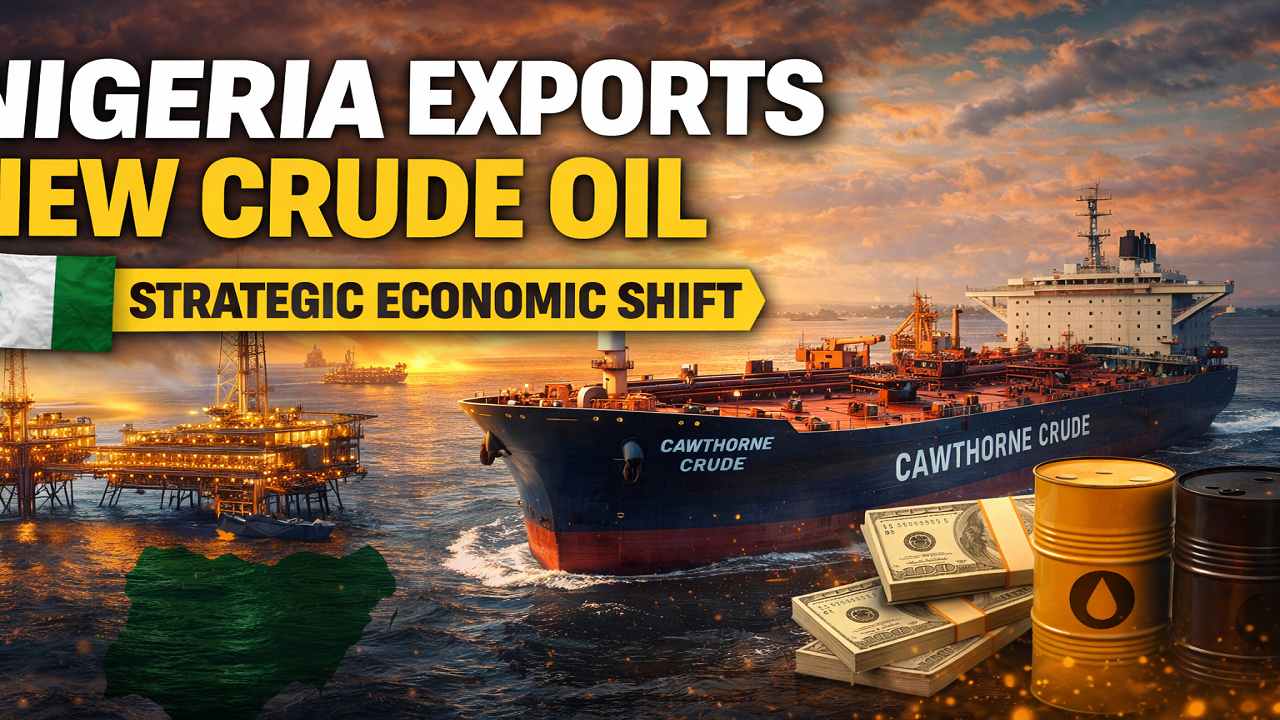
TT – Nigeria has taken a significant step in its oil industry with the successful export of a new crude oil grade known as Cawthorne Blend. At first glance, this may appear to be just another shipment in the global energy market—but in reality, it represents something much bigger: a strategic attempt to revive an industry that has long struggled with instability, underperformance, and global competition.
This development is not just about oil—it is about Nigeria’s economic future.
🚢 The First Shipment: What Happened?
Nigeria’s state-owned oil company successfully exported its first cargo of Cawthorne crude, marking the official entry of a new oil grade into the international market.
Key facts:
- Approximately 950,000 barrels were shipped
- The cargo was delivered to Europe (Netherlands)
- The crude was produced from Oil Mining Lease (OML) 18
- Export operations were handled through offshore loading facilities near Bonny
This milestone signals Nigeria’s intent to expand its oil portfolio and strengthen its position in global energy markets.
🛢️ What Is Cawthorne Crude—and Why Does It Matter?
Cawthorne Blend is a newly introduced crude oil grade developed from assets operated in the Niger Delta region. Like other Nigerian crude types (such as Bonny Light and Forcados), it is expected to appeal to international refiners due to its quality and refining efficiency.
Why introducing a new crude grade is important:
1. Diversification of Oil Products
Nigeria has historically relied on a limited number of crude blends. Adding a new grade:
- Reduces overdependence on existing exports
- Provides flexibility in pricing and marketing
- Attracts a wider range of buyers
2. Increased Revenue Potential
Every new export stream represents:
- Additional foreign exchange earnings
- Improved cash flow for the government
- Greater resilience against market shocks
In a country where oil accounts for a major portion of national revenue, this is critical.
3. Investor Confidence
Launching a new crude grade sends a message to investors:
Nigeria is still open for business—and capable of growth.
This is particularly important after years of declining investor interest due to instability and regulatory uncertainty.
📉 The Reality: Nigeria’s Oil Sector Has Been Struggling
To fully understand the significance of this breakthrough, you have to look at the challenges Nigeria has faced in recent years.
Major issues include:
🔧 Oil Theft and Pipeline Vandalism
Nigeria loses hundreds of thousands of barrels daily due to:
- Illegal tapping of pipelines
- Organized crude oil theft networks
- Sabotage of infrastructure
This has severely impacted production levels.
📉 Declining Output
Despite being one of Africa’s largest oil producers, Nigeria has struggled to meet its OPEC quotas.
- Current production: around 1.3–1.4 million barrels per day
- Potential capacity: significantly higher
This gap represents billions of dollars in lost revenue.
🏗️ Underinvestment
International oil companies have:
- Reduced operations
- Divested from onshore assets
- Shifted focus to more stable regions
This has slowed growth and modernization in the sector.
🚀 A Strategic Comeback Attempt
The launch of Cawthorne crude is part of a broader effort by Nigeria to revitalize its oil industry.
Key goals behind this move:
- Boost production levels
- Improve export diversity
- Strengthen global competitiveness
- Attract new investment
It also aligns with Nigeria’s long-term ambition to reach 3 million barrels per day by 2030.
🌍 Global Context: Timing Is Everything
Nigeria’s move comes at a time when the global energy market is highly dynamic.
Current global factors:
- Ongoing geopolitical tensions affecting oil supply
- Fluctuating oil prices
- Increasing demand from Europe and Asia
With some traditional suppliers facing disruptions, Nigeria has an opportunity to:
- Fill supply gaps
- Strengthen trade relationships
- Increase its relevance in global energy politics
⚠️ Challenges That Could Undermine Progress
While this development is promising, it is far from a guaranteed success.
Key risks include:
❗ Security in the Niger Delta
The region remains volatile, with risks of:
- Militancy
- Community unrest
- Sabotage of oil infrastructure
❗ Sustainability of Production
Launching a new crude grade is one thing—maintaining consistent output is another.
Nigeria must ensure:
- Stable production levels
- Efficient logistics
- Minimal disruptions
❗ Energy Transition Pressure
Globally, there is a shift toward:
- Renewable energy
- Reduced fossil fuel dependence
This means Nigeria must maximize its oil potential while it still can, before demand gradually declines.
🧠 The Bigger Picture: More Than Just Oil
This development reflects a deeper economic reality:
Nigeria is trying to stabilize and grow its economy in the face of multiple internal and external pressures.
Oil remains:
- The backbone of government revenue
- A key source of foreign exchange
- A major driver of economic policy
But relying too heavily on oil is also risky.
🧩 A Turning Point or Temporary Boost?
The export of Cawthorne crude raises an important question:
Is this the beginning of a sustained recovery—or just a short-term win?
For it to become a true turning point, Nigeria must:
- Address oil theft decisively
- Improve infrastructure
- Create a stable investment climate
- Diversify its economy beyond oil
Without these steps, even the most promising developments could fade.
✍️ Conclusion
Nigeria’s first export of Cawthorne crude is more than just an oil shipment—it is a symbol of ambition, resilience, and the ongoing struggle to reclaim economic strength.
It shows that progress is possible.
But it also highlights how much work still needs to be done.
In the end, this moment will be judged not by the success of a single shipment, but by whether Nigeria can build consistency, stability, and long-term growth from it.