

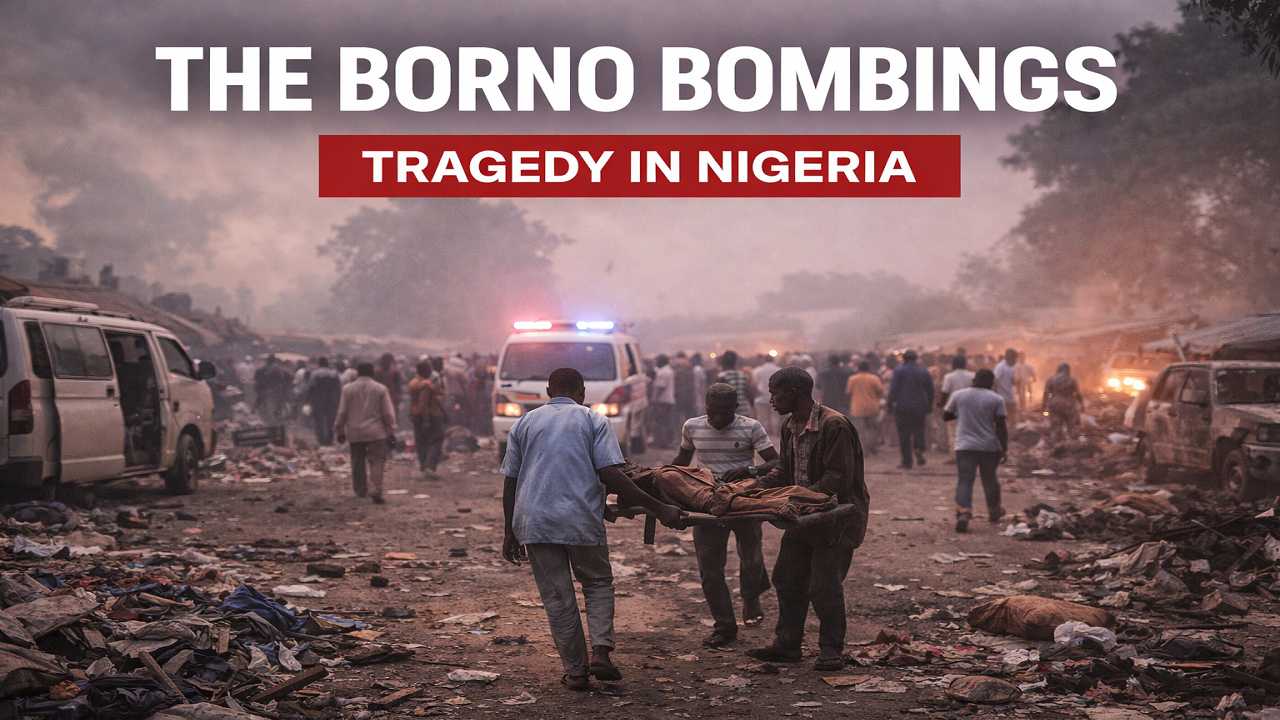
On the evening of March 16, 2026, a series of coordinated bomb explosions shook Maiduguri, the capital of Borno State in northeastern Nigeria. Once considered a city gradually recovering from years of insurgency, Maiduguri was plunged back into chaos as multiple blasts tore through crowded civilian locations, leaving dozens dead and over a hundred injured.
This tragic incident is not just another headline—it is a stark reminder that the threat of terrorism in Nigeria’s northeast remains far from over.
What Happened?
According to authorities and eyewitness accounts, at least three to four explosions occurred almost simultaneously across key areas of Maiduguri. The attacks targeted:
- The Monday Market, one of the busiest commercial hubs in the city
- The Post Office area, another densely populated zone
- The University of Maiduguri Teaching Hospital, particularly its entrance
- Parts of the Kaleri neighborhood
These locations were not randomly chosen—they are places where civilians gather in large numbers, amplifying the human toll.
The attacks happened in the evening, reportedly around the time many residents were observing iftar during Ramadan, making the crowds even larger than usual.

Casualties and Immediate Impact
Early reports confirm:
- At least 23 people killed
- More than 100 injured (around 108 reported)
Hospitals, especially the University of Maiduguri Teaching Hospital, were overwhelmed as victims flooded emergency wards. Witnesses described scenes of panic, with injured civilians transported in private vehicles and ambulances amid confusion and fear.
Some victims reportedly died before receiving medical attention, underscoring the severity of the blasts and the strain on emergency services.
Nature of the Attack
Authorities believe the explosions were suicide bombings, likely carried out in a coordinated manner to maximize casualties and disruption.
Although no group has officially claimed responsibility, suspicion has fallen on:
- Boko Haram, the long-standing insurgent group
- Islamic State West Africa Province (ISWAP), a splinter faction with increasing operational capacity
Both groups have a history of targeting civilian centers, markets, and public institutions in Borno State.
Government and Security Response
Nigeria’s President Bola Ahmed Tinubu condemned the attacks as acts of terrorism and ordered security chiefs to take immediate control of the situation in Maiduguri.
Borno State Governor Babagana Umara Zulum also described the bombings as “barbaric,” urging residents to remain vigilant while security forces intensify operations.
In response:
- Security presence has been increased across Maiduguri
- Investigations are ongoing
- Emergency agencies are coordinating medical and relief efforts
A Disturbing Pattern: Resurgence of Violence
What makes this attack particularly alarming is its timing.
In recent weeks, northeastern Nigeria has seen a surge in militant activity, including:
- Attacks on military bases
- Mass abductions
- Increased raids by insurgent groups
The Maiduguri bombings suggest a renewed operational strength by extremist groups, reversing what many believed was a period of relative calm in the region.

Historical Context: The Borno Insurgency
Borno State has been the epicenter of a violent insurgency since 2009, when Boko Haram launched its campaign to establish an extremist Islamist state.
Over the years:
- Hundreds of thousands have been killed
- More than 2 million people displaced
Maiduguri, in particular, has experienced repeated attacks but had seen improved security in recent years—making this latest bombing especially shocking.
Why This Attack Matters
This incident carries several broader implications:
1. Illusion of Stability Shattered
The attack undermines the perception that Maiduguri is secure, highlighting vulnerabilities even in heavily fortified cities.
2. Civilian Targeting Continues
Markets and hospitals remain prime targets, emphasizing the insurgents’ strategy of inflicting maximum civilian suffering.
3. Regional Security Concerns
The resurgence of violence threatens not just Nigeria but the wider Lake Chad region, where cross-border insurgency remains a major concern.
Human Stories Behind the Headlines
Beyond statistics, the bombing represents:
- Families torn apart
- Livelihoods destroyed
- Communities plunged back into fear
For residents of Maiduguri, this is not just news—it is a painful continuation of a conflict many hoped was fading.

Conclusion
The March 2026 Borno bombings are a tragic reminder that the fight against insurgency in Nigeria is far from over. Despite military efforts and years of counterterrorism operations, extremist groups continue to adapt and strike.
For Nigeria, the path forward will require not only military action but also:
- Strengthened intelligence
- Community engagement
- Economic and social rebuilding
Until then, cities like Maiduguri remain on the frontline of a conflict that continues to shape lives, communities, and the future of the region.