


TT – For many women, the 24/7 “hustle culture” feels like a constant uphill battle. We often push ourselves to maintain the same level of intensity every day, only to be met with inexplicable fatigue, mood swings, or burnout.
Cycle syncing is the revolutionary practice of aligning your lifestyle—your diet, exercise, work, and social life—with the four distinct phases of your menstrual cycle. Instead of treating your hormones as a monthly inconvenience, cycle syncing allows you to collaborate with your biology to optimize your energy, productivity, and overall well-being.
Why Cycle Syncing Matters
Traditional health and productivity models are often built around male hormonal patterns, which reset every 24 hours. In contrast, the female hormonal cycle spans roughly 28 days, during which estrogen, progesterone, and testosterone fluctuate dramatically.
By leaning into these shifts, you can:
- Reduce PMS and period pain: Proper nutrition and rest can alleviate cramps, bloating, and irritability.
- Enhance fitness results: Timing high-intensity workouts when your hormones support them leads to better performance and lower injury risk.
- Boost mental clarity: Matching complex work tasks with your most energetic phases can prevent frustration and overwhelm.
The Four Phases of Your Cycle
To start working with your hormones, you must first understand the “seasons” of your cycle.
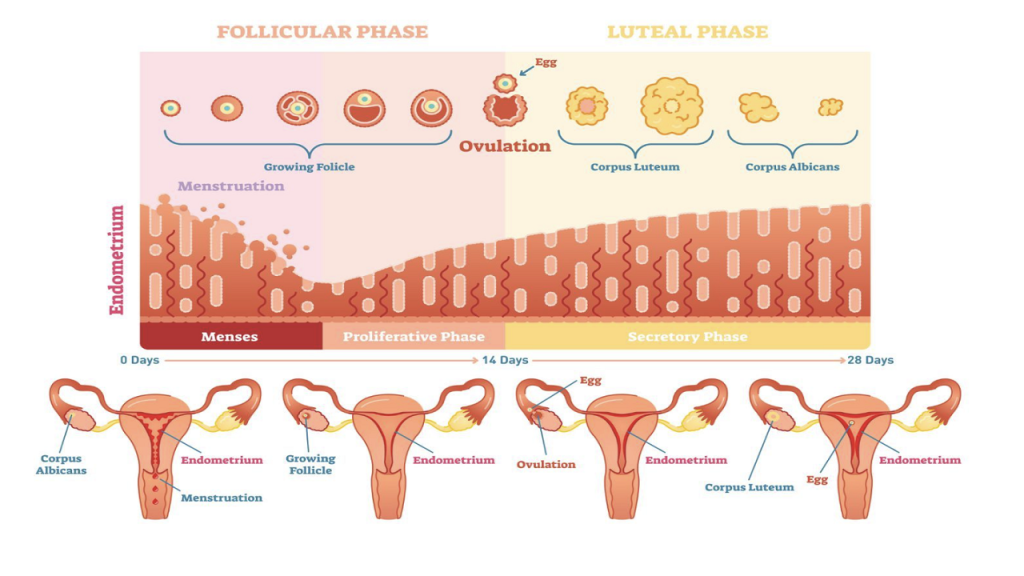
1. Menstrual Phase (The “Inner Winter”)
- Timing: Days 1–5 (starts on the first day of full flow).
- The Hormones: Estrogen and progesterone are at their lowest.
- The Vibe: Low energy, introspective, and needing rest.
- What to Do:
- Exercise: Restorative yoga, gentle stretching, or leisurely walks.
- Nutrition: Iron-rich foods (lean meats, lentils, leafy greens) and vitamin C to help replace what is lost during your period.
- Focus: Reflection, journaling, and clearing your calendar for extra sleep.
2. Follicular Phase (The “Inner Spring”)
- Timing: Days 6–14 (after your period ends until ovulation).
- The Hormones: Estrogen begins to climb, boosting your mood and motivation.
- The Vibe: Creative, social, and physically stronger.
- What to Do:
- Exercise: Cardio, light hiking, or moderate strength training.
- Nutrition: Fermented foods, cruciferous vegetables (broccoli, cauliflower) to help the liver process rising estrogen, and complex carbs like quinoa.
- Focus: Brainstorming, starting new projects, and goal-setting.
3. Ovulatory Phase (The “Inner Summer”)
- Timing: Days 14–17 (mid-cycle surge).
- The Hormones: Estrogen and testosterone peak.
- The Vibe: Magnetic, confident, and at peak energy.
- What to Do:
- Exercise: High-Intensity Interval Training (HIIT), running, or heavy weightlifting.
- Nutrition: Light, vibrant foods like raw veggies, berries, and plenty of water.
- Focus: Public speaking, networking, and difficult conversations.
4. Luteal Phase (The “Inner Fall”)
- Timing: Days 17–28 (after ovulation until your period begins).
- The Hormones: Progesterone rises, then drops sharply if you aren’t pregnant.
- The Vibe: Task-oriented but winding down; possible PMS symptoms late in the phase.
- What to Do:
- Exercise: Pilates, swimming, or moderate resistance training.
- Nutrition: Magnesium-rich foods (dark chocolate, pumpkin seeds) to reduce anxiety and bloating, and complex carbs to stabilize blood sugar.
- Focus: Wrapping up tasks, organizing your home, and prioritizing self-care.
How to Get Started
Cycle syncing isn’t about being perfect; it’s about awareness.
- Track Your Cycle: Use an app like Clue or Flo, or a simple paper journal, to note when your period starts and how you feel daily.
- Start Small: Don’t overhaul your life overnight. Pick one area—like your workouts or your diet—to align with your phase this month.
- Listen to Your Body: If you’re in your ovulatory phase but feel exhausted, rest. Cycle syncing is a tool for connection, not another set of rigid rules.
By understanding your body’s unique rhythm, you can stop fighting against your natural “valleys” and start maximizing your “peaks”. It’s time to work with your hormones, not against them.
This is for informational purposes only. For medical advice or diagnosis, consult a health professional.