

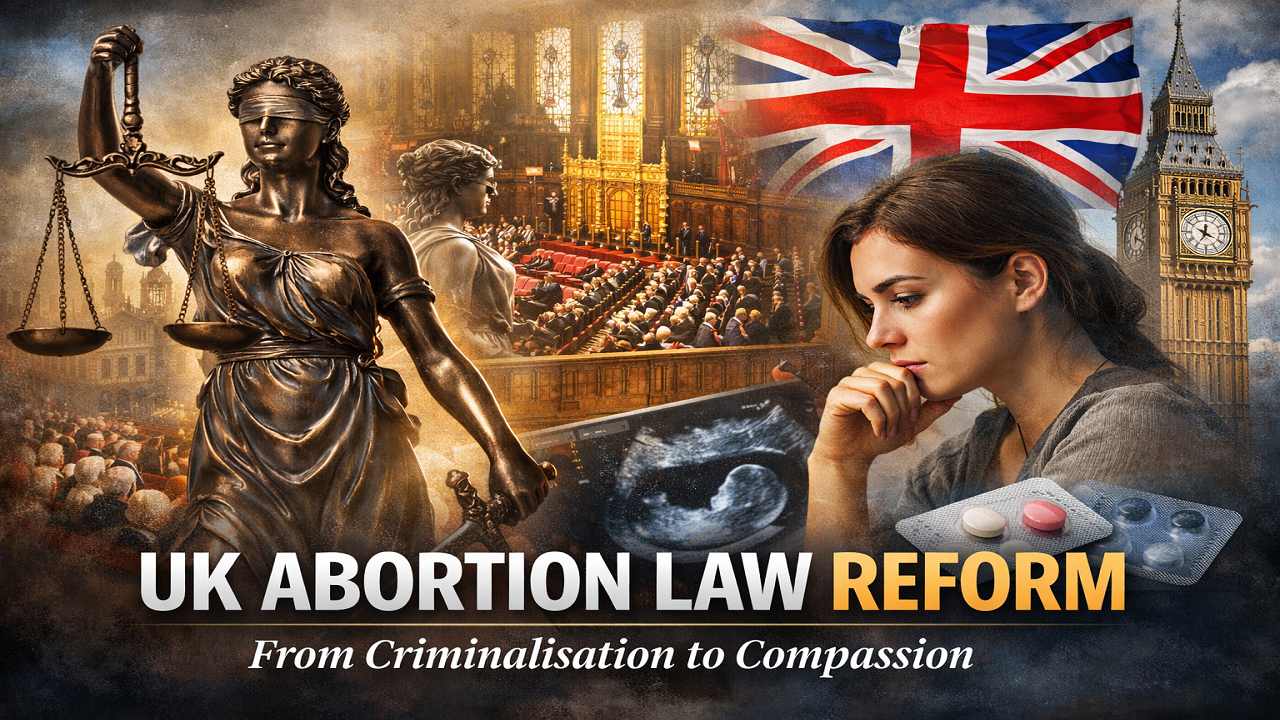
A historic shift in the UK’s legal landscape is underway as the House of Lords backs reforms to abortion law. Moving away from criminalisation toward a healthcare-focused approach, this decision marks a profound turning point in how Britain treats reproductive rights, justice, and compassion.
For decades, abortion in the UK existed in a legal contradiction—permitted, yet still criminal at its core. Now, the House of Lords is changing that reality, ushering in a new era that replaces punishment with compassion and redefines the relationship between women and the law
A Historic Shift in British Reproductive Rights
In a move that may redefine reproductive justice in modern Britain, the UK House of Lords has backed sweeping reforms to abortion law—marking one of the most significant legal shifts since the Abortion Act 1967.
But contrary to widespread misconceptions, this is not a simple story of “legalising abortion.” Rather, it is a complex transformation: a transition from criminal punishment to healthcare-based regulation, rooted in changing social realities, legal contradictions, and moral debate.
The Legal Legacy: Abortion as a Crime
To understand the weight of this moment, we must begin with the paradox at the heart of UK abortion law.
For decades, abortion in England and Wales has operated under a dual framework:
- The Abortion Act 1967 allowed abortions under specific conditions—such as approval by two doctors and a gestational limit (now typically 24 weeks).
- Yet, the underlying criminal prohibition remained embedded in the Offences Against the Person Act 1861, where unlawful abortion could theoretically carry severe penalties, including life imprisonment.
This contradiction meant that abortion was legal—but still fundamentally a criminal act unless it met strict criteria.
In recent years, this framework has come under increasing strain, especially with the rise of telemedicine and self-managed abortions.

The Turning Point: Why Reform Became Urgent
The push for reform gained momentum after a series of troubling developments:
- Increasing numbers of women were investigated or prosecuted for ending pregnancies outside the legal framework.
- Cases emerged of women being arrested after miscarriages or for using abortion pills at home.
- Medical bodies and advocacy groups argued that criminalisation discouraged women from seeking care.
In June 2025, the House of Commons voted overwhelmingly to decriminalise abortion for women—setting the stage for the House of Lords to review and refine the legislation.
The House of Lords Decision: What Actually Changed
In March 2026, the House of Lords took decisive steps to support and expand this reform.
Key Elements of the Lords’ Intervention:
- Removal of criminal liability for women
Women who end their own pregnancies will no longer face prosecution under criminal law. - Pardons for past convictions
The Lords backed measures to pardon women previously convicted under abortion laws and to clear their records. - Retention of medical regulation
Crucially, the reform does not remove existing safeguards, such as time limits or requirements for medical oversight.
This distinction is essential: the reform decriminalises women, but not abortion itself as a regulated medical practice.
Clearing the Confusion: What This Reform Does NOT Do
Public discourse has been clouded by misinformation. Some critics have claimed the reform allows abortion “up to birth.”
This is misleading.
- The legal framework governing medical professionals remains unchanged, including gestational limits.
- What has changed is who is punished—shifting focus away from women and toward maintaining medical standards.
In essence, the law moves abortion out of the criminal justice system for women, but keeps it within the healthcare system.

The Moral and Political Divide
Few legal reforms expose societal fault lines as sharply as abortion—and this one is no exception.
Supporters argue:
- It is a human rights issue, ensuring women are not criminalised for healthcare decisions.
- It reflects modern realities, including access to abortion pills and telemedicine.
- It reduces trauma caused by police investigations and prosecutions.
Critics warn:
- Decriminalisation could weaken protections for late-term pregnancies.
- It may open the door to unsafe or unregulated practices.
- Ethical concerns remain about fetal rights and societal values.
The House of Lords debates reflected this tension, with attempts to block or limit the reform ultimately failing.
A Broader Historical Arc
This reform is not an isolated moment—it is part of a centuries-long evolution.
- Medieval law once tied abortion legality to “quickening.”
- The 19th century criminalised abortion outright.
- The 20th century introduced conditional legality via the 1967 Act.
- Now, the 21st century is witnessing a shift toward decriminalisation and rights-based frameworks.
Each phase reflects changing attitudes toward women, medicine, and state authority.
What This Means for the Future
The House of Lords’ decision signals a deeper transformation in legal philosophy:
From punishment to protection. From morality policing to healthcare governance.
Looking ahead, several questions remain:
- Will full decriminalisation (including for providers) follow?
- How will telemedicine reshape abortion access long-term?
- Can law keep pace with rapidly evolving reproductive technologies?
What is clear, however, is that the UK has entered a new chapter—one that reframes abortion not as a crime to be punished, but as a reality to be managed with compassion, safety, and dignity.

Conclusion: A Defining Moment in Modern Britain
The House of Lords has not simply amended a law—it has redefined the relationship between women and the state.
By removing the threat of criminal prosecution, Parliament has acknowledged a profound truth:
That justice, in this context, lies not in punishment—but in understanding.
For supporters, this is a victory decades in the making.
For critics, it is a moment of deep concern.
For history, it is unmistakably a turning point.